
Rubber Sole Knowledge Hub
Practical knowledge for footwear brands, factories and sourcing teams developing rubber soles, insoles and foot-support components for demanding applications and hot-climate markets.
What is the Matrix Route Knowledge Hub?
The Matrix Route Knowledge Hub is a practical knowledge resource for rubber footwear development. It covers material selection, rubber testing, sole design, manufacturing processes, quality control and product development for hot and demanding climates.
The content is designed for professional buyers, footwear developers and manufacturing teams—not only for general consumers.
Browse Practical Knowledge & Guides
Explore practical guides, material comparisons, testing methods and manufacturing insights by topic.
Footwear Materials & Rubber Compounds
Compare natural rubber, synthetic rubber, EVA, TPU and TPR compound behavior for different footwear applications.
Natural Rubber • EVA • TPU • TPR • Compound Selection
Rubber Testing & Performance Guides
Understand how hardness, tensile strength, abrasion, compression set and slip resistance are evaluated and interpreted.
ASTM • ISO • SATRA • DIN • Test Interpretation
Footwear Sole Engineering
Practical guidance on outsole geometry, traction patterns, flex grooves, weight distribution and two-piece construction.
Outsole Architecture • Arch Support • Traction • Flex Grooves
Rubber Sole Manufacturing Guides
Understand rubber sole production from compound mixing and mold tooling to compression molding, bonding and factory QC.
OEM • Compression Molding • Quality Control • Production
Hot-Climate & Middle East Footwear Guides
Practical manufacturing considerations for hot climates, polished indoor flooring and traditional Arabic sandal construction.
Heat Resistance • GCC Markets • Polished Floors • Arabic Sandal Soles
OEM Buyer & Sourcing Guides
Practical guidance for footwear brands and sourcing teams on supplier selection, RFQ preparation, tooling readiness and production specifications.
Supplier Selection • RFQ • MOQ • Factory Evaluation
Comprehensive Topic Clusters
Direct links to our two core published engineering pillars and supporting technical breakdown guides.
Material Selection & Compound Engineering
Technical guidance for selecting, comparing and engineering rubber compounds and footwear materials, including natural rubber, synthetic rubber, TPR, TPU, EVA, hardness, durability, testing and manufacturing performance.
Hot-Climate & Middle East Product Development
Engineering guidance for developing footwear components for hot climates and Middle East markets, including heat resistance, Arabic sandal construction, dress-shoe soles, grip, bonding, durability and application-specific compound development.
Featured Practical Guides
Start with our most useful guides for footwear material selection and product development.
B2B Buyer’s Guide: Comparing Footwear Sole Materials for Hot-Climate Markets
Natural rubber, synthetic rubber, EVA, TPU and PVC offer different trade-offs in weight, flexibility, abrasion behavior, compression recovery, grip potential, production requirements and cost. Natural rubber can be a strong option for sandal outsoles, dress-shoe soles and flexible molded footwear components when its compound, hardness, thickness and tread design are developed for the intended use. EVA is commonly selected where lightweight cushioning is a priority, particularly in midsoles. Synthetic rubbers may be appropriate when properties such as oil resistance, abrasion behavior or formulation control are important. TPU and PVC can support repeatable molded production and specific commercial requirements, although their suitability depends heavily on polymer grade, hardness and product construction.
Natural Rubber vs. EVA Soles: A Practical B2B Material Selection Guide
Natural rubber and EVA serve different functions in footwear construction. Natural rubber is commonly evaluated for molded outsoles and other components where flexibility, elastic recovery, tread definition, grip potential and compound customization are important. EVA is commonly selected for midsoles, lightweight sandals and cushioning components where low weight and softness are priorities. Neither material is universally better. For many footwear projects, the most effective solution is combining an EVA cushioning layer with a rubber contact outsole.
Understanding Shore A Hardness for Rubber Soles
Shore A hardness measures the resistance of rubber to indentation under defined test conditions. It does not directly measure comfort, cushioning, grip, abrasion resistance, durability, compression recovery, or walking performance. Two rubber soles with exactly the same Shore A value may perform very differently because hardness represents only one characteristic of a complete rubber compound. For B2B sourcing, Shore A should be specified together with other engineering requirements rather than used as the only acceptance criterion.
Hot-Climate & Middle East Footwear Engineering Guide
Developing footwear components for hot climates and Middle East markets requires more than selecting a rubber compound described as "heat resistant." The sole must function as part of a complete footwear system under conditions that may include high ambient temperature, heated outdoor walking surfaces, air-conditioned indoor environments, repeated transitions between hot and cool conditions, smooth marble/tile flooring, dust and fine sand, long storage and transportation periods, and high visual/finishing expectations for Arabic sandal and dress-shoe constructions.
Natural Rubber vs. Synthetic Rubber Comparison
Natural rubber and synthetic rubber are both widely used in footwear manufacturing, yet they are not interchangeable. Each material family offers different advantages depending on the intended application, environmental conditions and performance requirements.
Natural Rubber vs. TPR for Footwear Components
Natural rubber and thermoplastic rubber (TPR) are both widely used in footwear manufacturing. Natural-rubber-based compounds are commonly selected when elasticity, resilience, flex performance and application-specific compound development are important. TPR is commonly selected when efficient thermoplastic injection molding, color consistency, design flexibility, shorter processing cycles and cost-controlled high-volume production are priorities.
Start with Your Product Challenge
Select the question closest to your current product-development challenge.
Manufacturing Capability Snapshot
Verified operational facts for OEM footwear sole and component production.
In-House Mixing
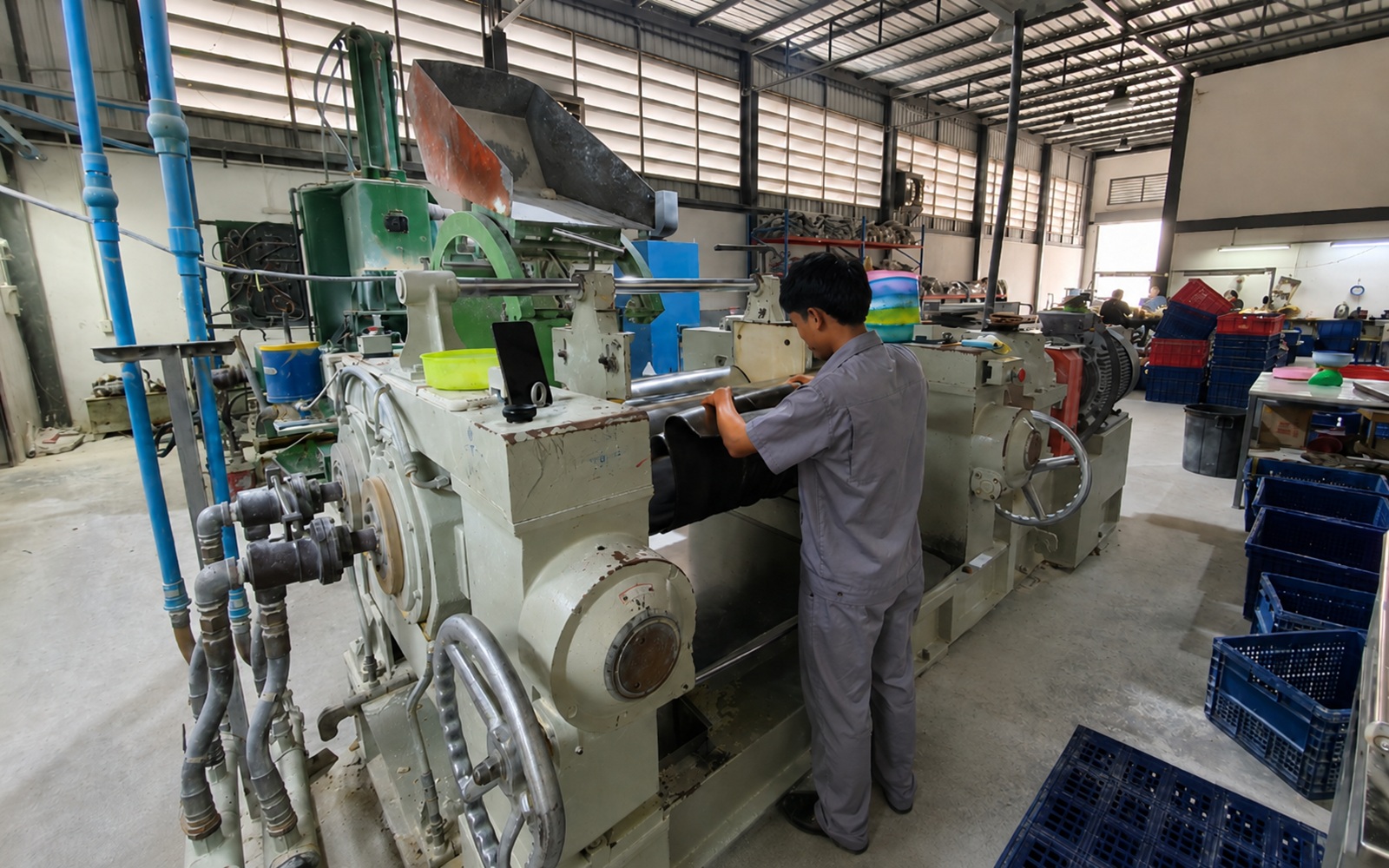
Internal dispersion kneader mixer and two-roll open mill for custom natural and synthetic rubber formulations.
Compression Vulcanization
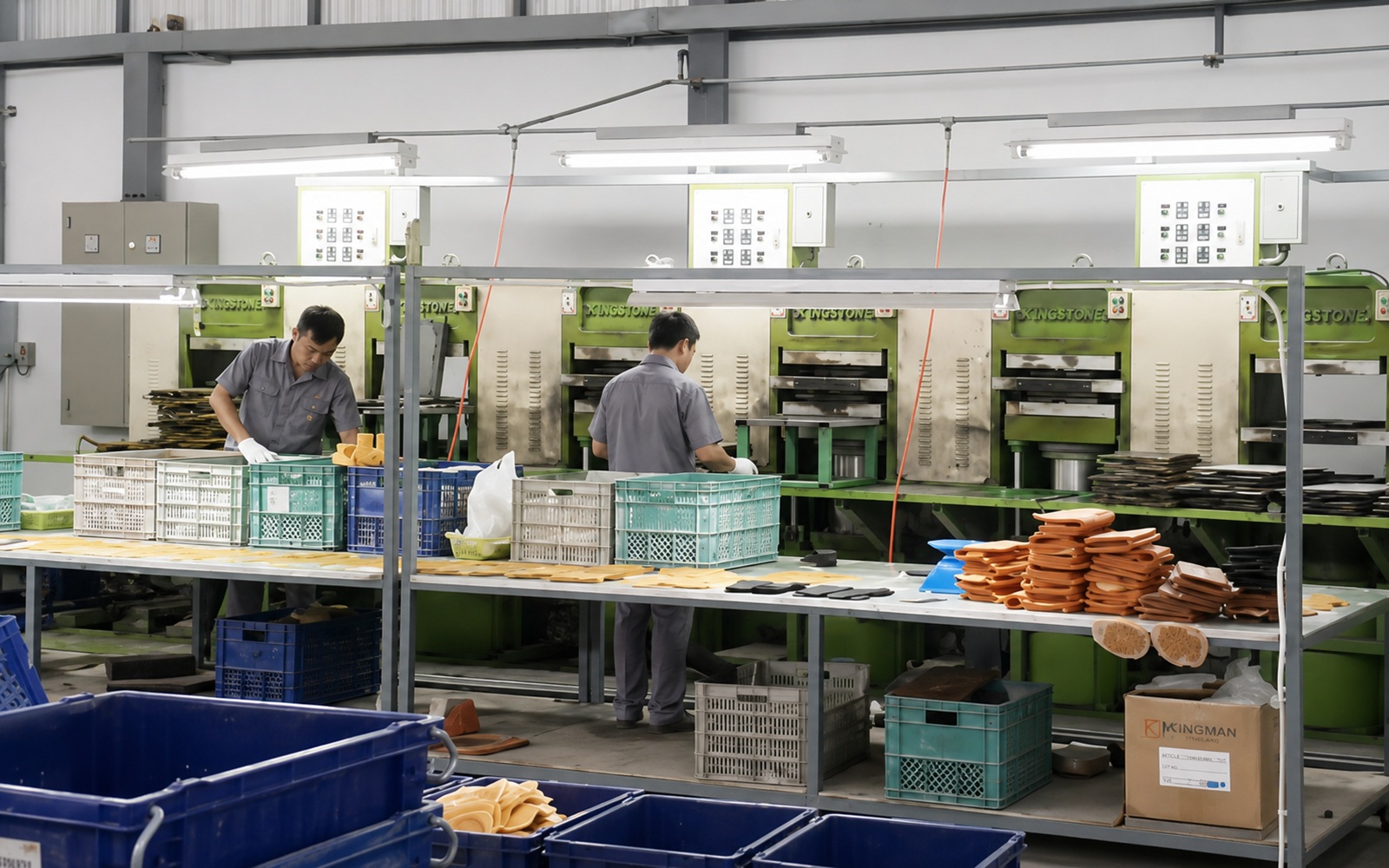
Hydraulic multi-daylight heated compression presses designed for durable outsole, midsole, and component molding.
35–75 Shore A
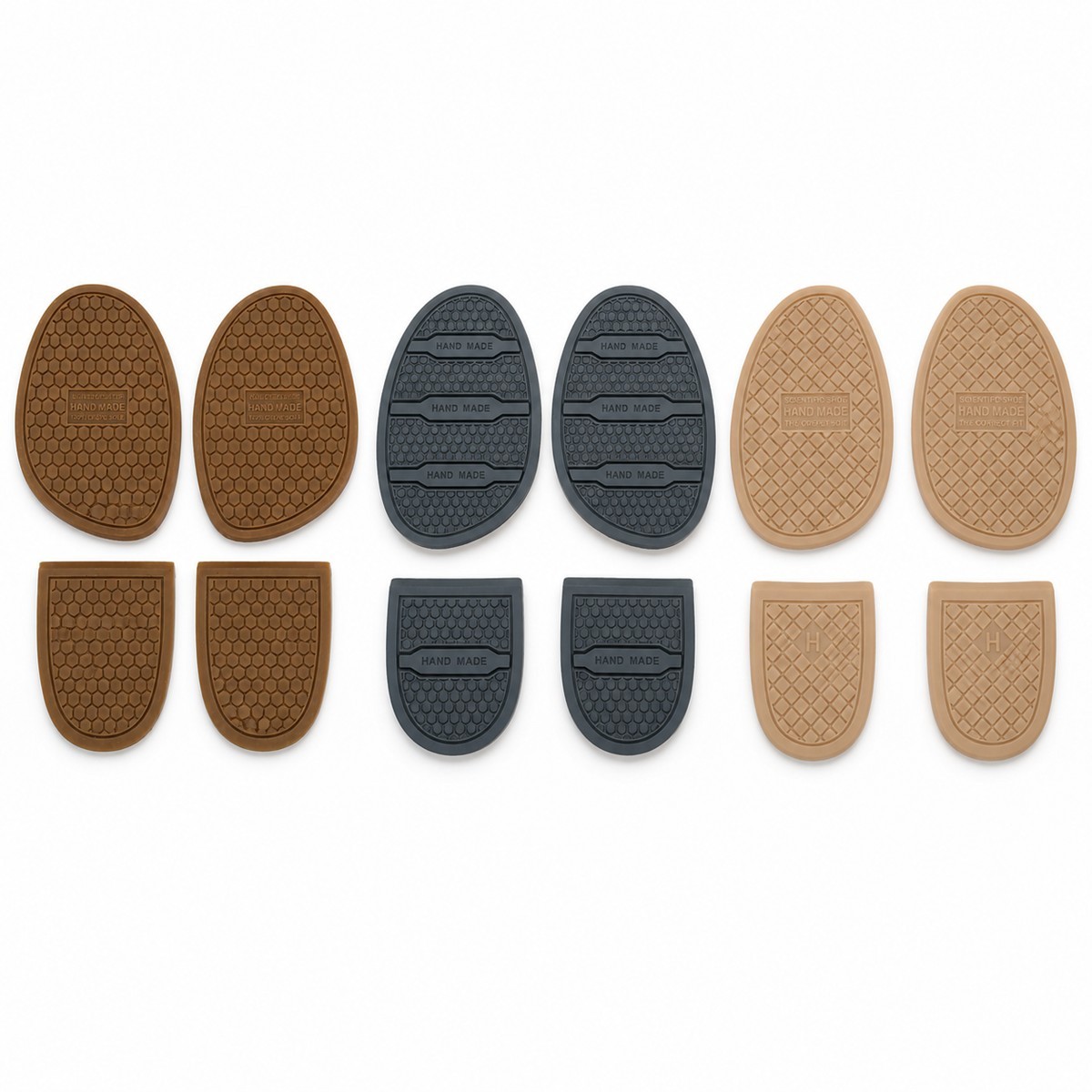
Formulation flexibility ranging from compliant footbed pads to firm, wear-resistant heel and shank components.
Factory Physical Checks
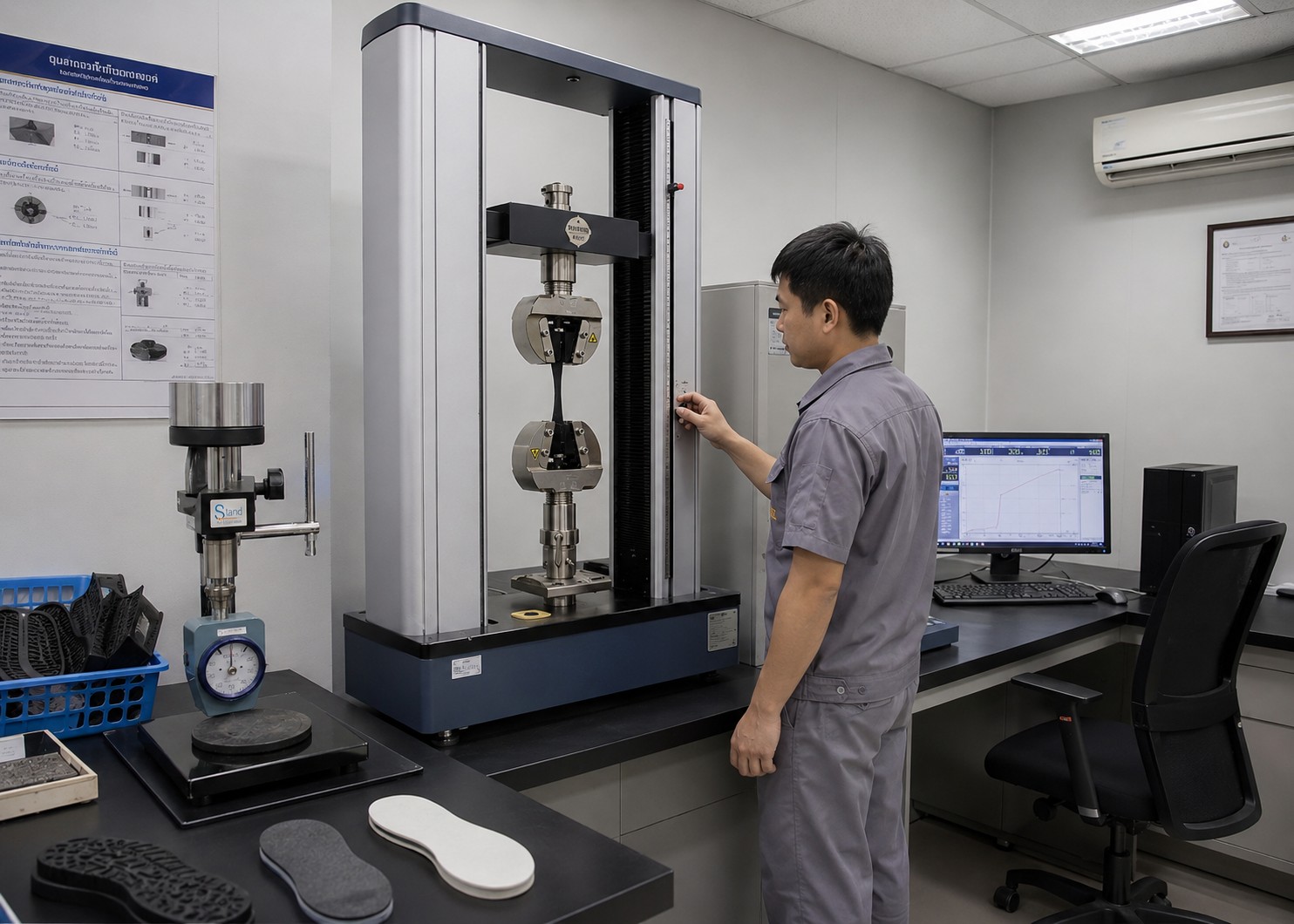
In-house checks for Shore A hardness, part thickness, density, tensile, elongation, and rotary drum abrasion.
Trial Molding & Coordination
Trial molding, sample inspection, and technical coordination with client or external mold-making partners.
1,500 Pairs / Style / Color
Typical MOQ approx. 300 pairs per size; monthly factory capacity up to 50,000 pairs based in Samut Prakan, Thailand.
Looking for a Reliable Rubber Sole OEM Partner?
Contact Matrix Route to discuss your footwear sole specifications and production requirements.
Knowledge Grounded in Manufacturing Experience
Our technical guides are developed from hands-on rubber compounding, compression molding, factory quality-control experience, and practical interpretation of physical test results.
Where appropriate, we combine published standards with factory observations, production considerations and real product-development challenges.
Explore Key Technical Topics
Latest Technical Articles
Recent technical publications and manufacturing breakdowns.
B2B Buyer’s Guide: Comparing Footwear Sole Materials for Hot-Climate Markets
Natural rubber, synthetic rubber, EVA, TPU and PVC offer different trade-offs in weight, flexibility, abrasion behavior, compression recovery, grip potential, production requirements and cost. Natural rubber can be a strong option for sandal outsoles, dress-shoe soles and flexible molded footwear components when its compound, hardness, thickness and tread design are developed for the intended use. EVA is commonly selected where lightweight cushioning is a priority, particularly in midsoles. Synthetic rubbers may be appropriate when properties such as oil resistance, abrasion behavior or formulation control are important. TPU and PVC can support repeatable molded production and specific commercial requirements, although their suitability depends heavily on polymer grade, hardness and product construction.
Natural Rubber vs. EVA Soles: A Practical B2B Material Selection Guide
Natural rubber and EVA serve different functions in footwear construction. Natural rubber is commonly evaluated for molded outsoles and other components where flexibility, elastic recovery, tread definition, grip potential and compound customization are important. EVA is commonly selected for midsoles, lightweight sandals and cushioning components where low weight and softness are priorities. Neither material is universally better. For many footwear projects, the most effective solution is combining an EVA cushioning layer with a rubber contact outsole.
Understanding Shore A Hardness for Rubber Soles
Shore A hardness measures the resistance of rubber to indentation under defined test conditions. It does not directly measure comfort, cushioning, grip, abrasion resistance, durability, compression recovery, or walking performance. Two rubber soles with exactly the same Shore A value may perform very differently because hardness represents only one characteristic of a complete rubber compound. For B2B sourcing, Shore A should be specified together with other engineering requirements rather than used as the only acceptance criterion.
Natural Rubber vs. Synthetic Rubber Comparison
Natural rubber and synthetic rubber are both widely used in footwear manufacturing, yet they are not interchangeable. Each material family offers different advantages depending on the intended application, environmental conditions and performance requirements.
Rubber vs. TPU & PVC in Footwear Manufacturing
Rubber, Thermoplastic Polyurethane (TPU) and Polyvinyl Chloride (PVC) are three widely used material systems in footwear sole manufacturing. While all three are flexible polymers, they differ substantially in chemical structure, processing methods, physical performance, weight, grip, temperature behavior and cost structure.
Natural Rubber vs. TPR for Footwear Components
Natural rubber and thermoplastic rubber (TPR) are both widely used in footwear manufacturing. Natural-rubber-based compounds are commonly selected when elasticity, resilience, flex performance and application-specific compound development are important. TPR is commonly selected when efficient thermoplastic injection molding, color consistency, design flexibility, shorter processing cycles and cost-controlled high-volume production are priorities.
Technical Reference & Decision Tools
Practical frameworks for material selection, physical testing verification and OEM project readiness.
Rubber Sole OEM RFQ Checklist
14 key technical, CAD, compound, and tooling points to prepare before supplier outreach.
Material Selection Decision Tool
Side-by-side comparison across 9 properties for Natural Rubber, EVA, TPU, TPR, Synthetic Rubber, and PVC.
Example Natural Rubber Compound Test Results
Documented physical test data across 10 ASTM, DIN, and SATRA test standards.
Trial Molding & Tooling Explainer
The 6-step sampling, inspection, and tooling coordination process before mass production.
Frequently Asked Questions
Developing a Rubber Sole or Footwear Component?
Tell us about your application, target market, material requirements and expected production volume. Our team can help evaluate the next steps for OEM or custom development.
Please include the product type, target market, expected quantity and available drawings or samples.