
OEM Rubber Sole Manufacturing in Thailand for Footwear Brands & Factories
Matrix Route manufactures natural rubber footwear components—not complete finished shoes. We support OEM projects from drawings, physical samples, existing molds, reference products or performance requirements, with in-house rubber compounding, trial molding, factory QC and flexible OEM collaboration.
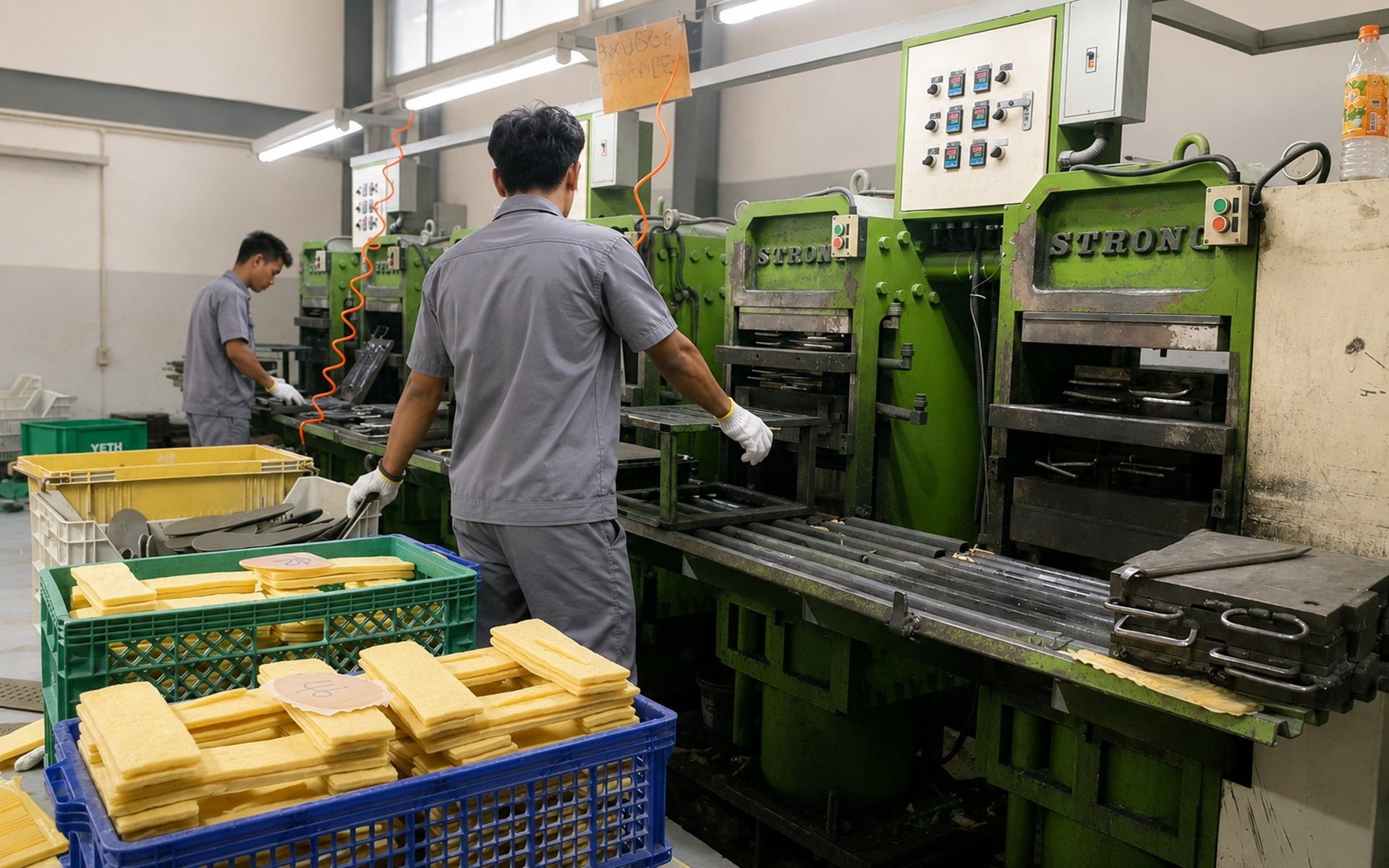
Direct compression molding, in-house kneader mixing & factory QC process.
Built for the Footwear Supply Chain
We serve commercial B2B partners across all tiers of regional and international footwear production.
Footwear Manufacturers
Shoe manufacturing plants requiring consistent rubber outsole shipments, customized compounding, exact mold dimensions, and reliable batch-to-batch physical properties.
Footwear Brands & Private Labels
Footwear brands seeking a premium OEM manufacturing partner in Thailand to engineer high-grip, durable, and comfortable soles for regional market launches.
Component Importers & Distributors
Footwear component distributors supplying soles, insoles, and arch support parts to regional markets across the Middle East and Asia.
Molded Rubber Footwear Components
Custom compression molded outsoles, dual-density bases, traditional sandal soles, and natural rubber insoles.
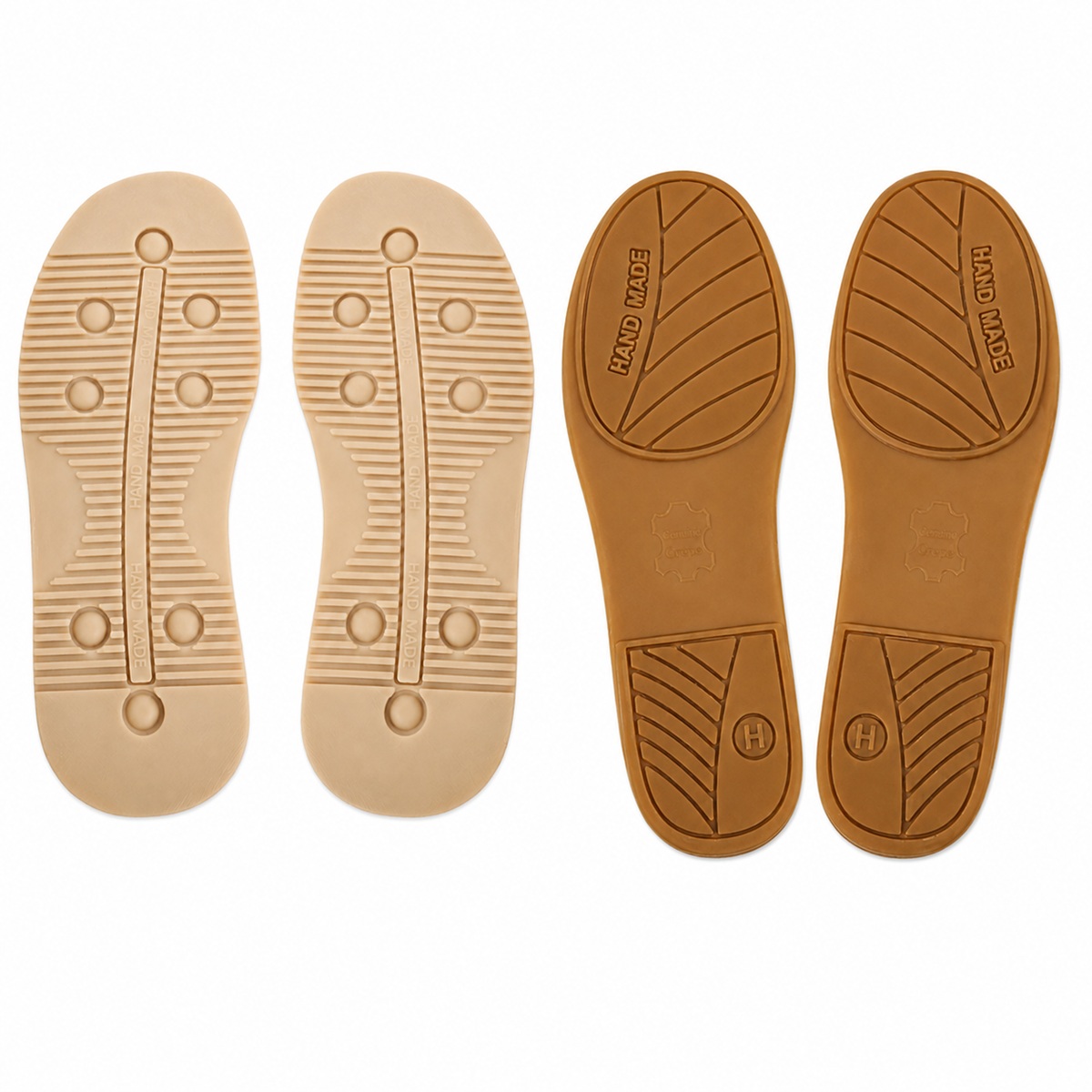
One-piece Rubber Outsole
Casual sneakers, dress footwear, work boots, active outdoor footwear
High-abrasion natural rubber compression molding with customizable tread channels, deep flex grooves, and Shore A 50–75 hardness options.
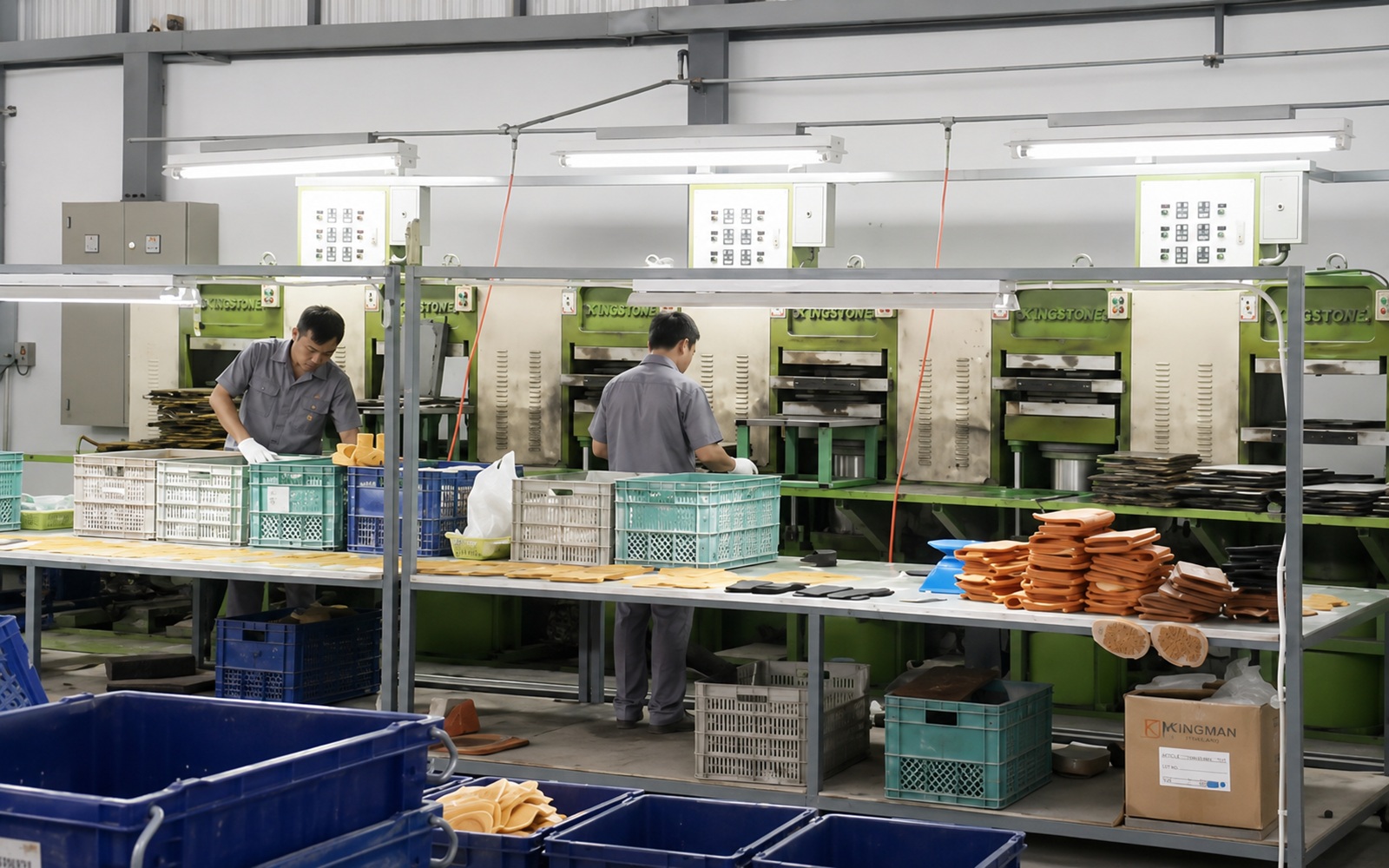
Two-piece Rubber Sole
Premium dress shoes, hybrid comfort footwear, multi-density sandals
Dual-layer vulcanization bonding a soft impact-absorbing cushion layer with an ultra-durable natural rubber tread for superior comfort and flex.
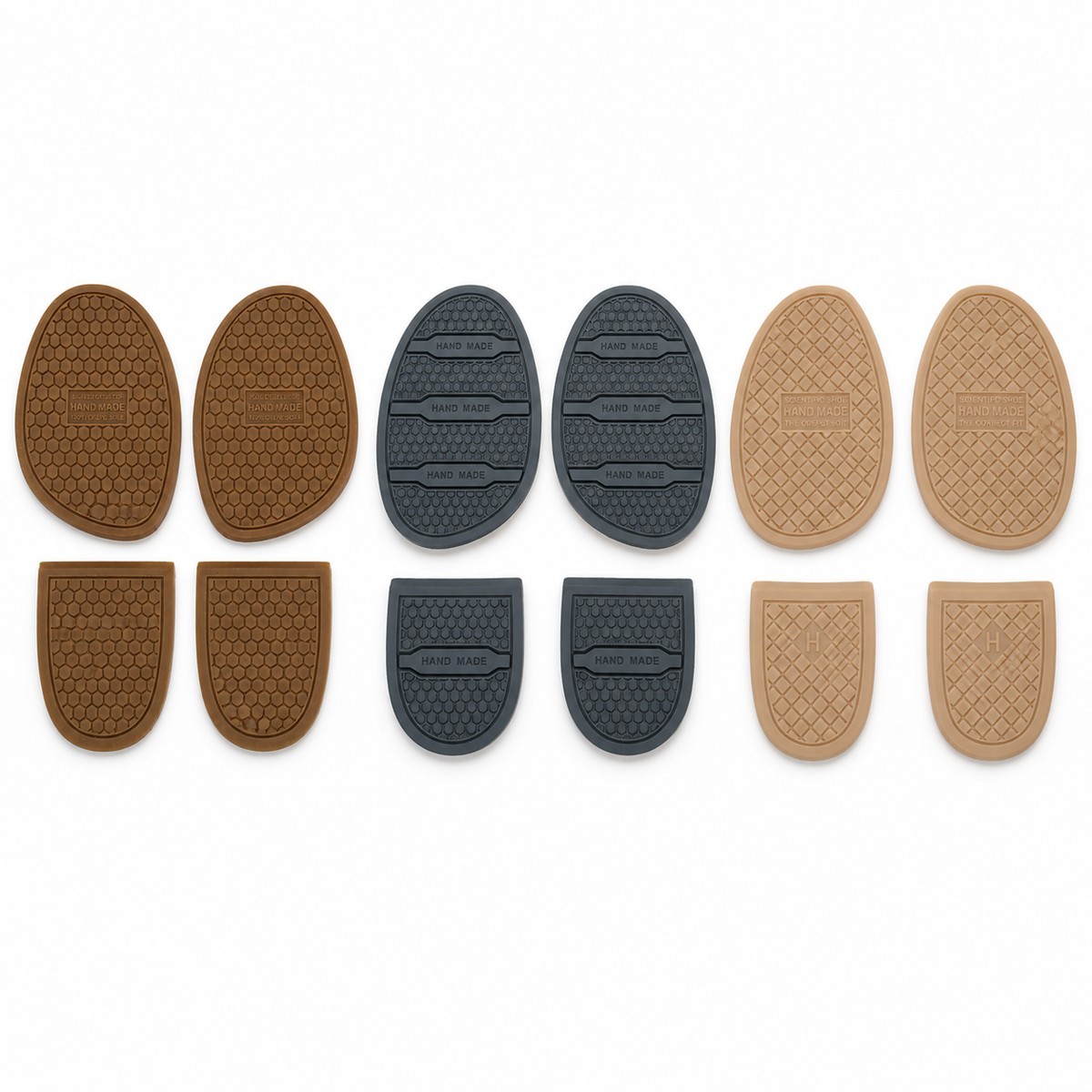
Arabic Sandal Sole
Traditional Middle East sandals, luxury leather footwear, thong sandals
Engineered for hot-climate thermal stability, with compound evaluation using controlled heat-aging methods and slip-resistant tread design for polished marble and tile surfaces, underfoot weight distribution, and metallic logo inlays.
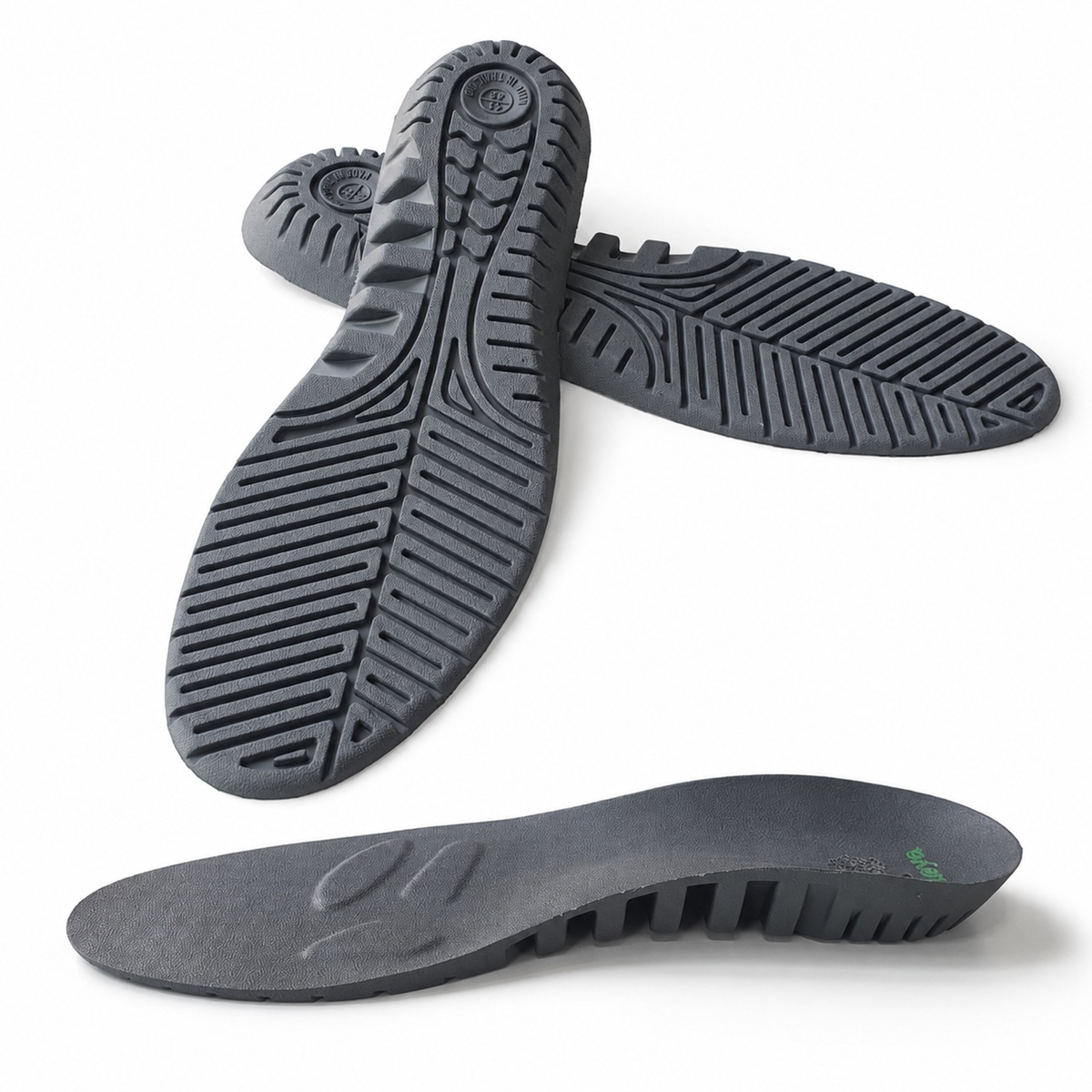
Natural Rubber Insole
Anatomical sandals, orthotic dress footwear, ergonomic leather shoes
Natural-rubber-based insole compounds developed for elasticity, resilient cushioning and contour support.
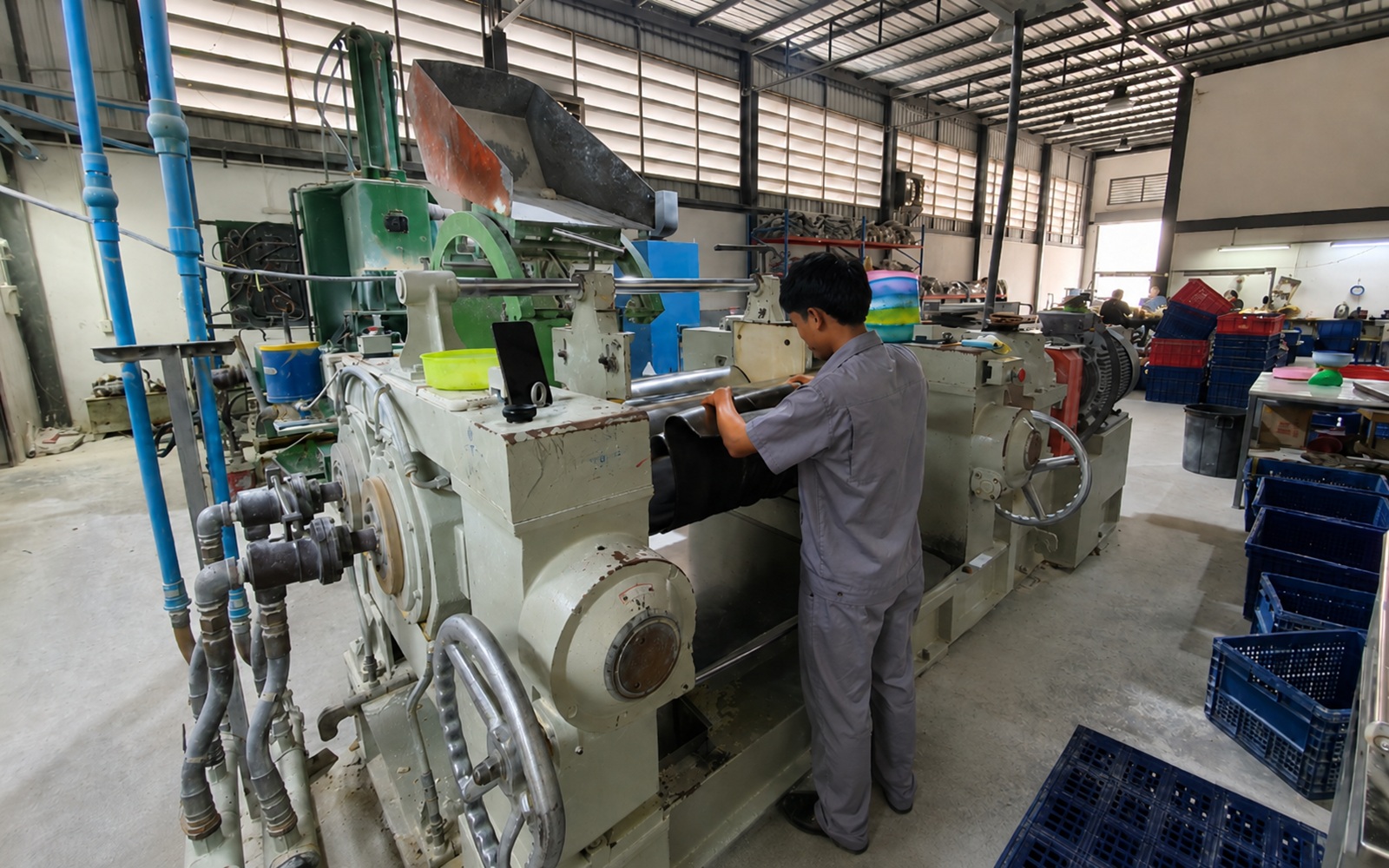
Custom Rubber Components
Arch support inserts, heel impact pads, toe randings, custom branded rubber badges
Precision compounded rubber parts engineered for target Shore A hardness within project-specific formulation ranges (Shore A 35–75 development capability), custom elasticity, and dependable bonding to footwear assemblies.
Start From What You Have
Select your current project assets to view tailored OEM development workflows and technical guidance.
I Have a Drawing
2D dimensional drawing, 3D CAD model (STEP/STL), target Shore A hardness, and annual volume.
Drawing and specification review, compound feasibility evaluation, tooling coordination planning, and mold quotation.
OEM Engineering Support Capabilities
Full technical support bridging raw compound chemistry, tooling coordination with mold partners, and physical performance testing.
Product Development
Compound Development
Performance Optimization
Project Development Process
Technical Requirements Review
Footwear type, target market, dimensions, customer drawings, physical samples, target Shore A hardness or performance requirements.
Technical review of application requirements, material suitability assessment, dimensional review and compound feasibility check.
Compound Selection & Adjustment
Specification confirmation (hardness, color, density, abrasion and flex requirements).
In-house rubber compound formulation and adjustment using internal kneader and two-roll mill (Shore A 35–75 capability).
Mold / Tooling Coordination
Existing mold tooling, approved 2D/3D CAD drawing, or authorization to proceed with tooling fabrication.
Tooling coordination with specialized external mold-making partners or setup of customer-supplied tooling. Tooling lead time is confirmed separately with the mold maker based on complexity and scheduling.
Trial Molding & Tooling Validation
Feedback on initial press test observations and fit review.
Trial molding conducted at our Samut Prakan factory to check compression press fit, rubber flow, shrinkage behavior and surface finish.
Sample Preparation & Inspection
Sample review, fitting test and production approval.
Vulcanized sample preparation with dimensional, visual and Shore A durometer inspection before production approval. Tooling adjustments coordinated with external mold maker if required.
Mass Production
Purchase order, batch quantity confirmation and export delivery schedule.
In-house compounding, compression molding up to 50,000 pairs/month, routine factory QC inspection, trimming and export packaging.
Commercial Terms & Production Parameters
Typical MOQ per style/color (~300 pairs/size).
Compression press capacity (6 heads, 12 positions) in Samut Prakan, Thailand.
Tunable formulation range for cushioning or durable tread.
We review project specs before confirming next steps.
Mass production typically ~30 days.
Why Footwear Brands & Factories Work With Matrix Route
Combining origin natural rubber advantages with disciplined manufacturing and transparent engineering support.
Rubber Expertise
Established in 2020 in Samut Prakan, Thailand, Matrix Route is backed by more than 20 years of hands-on production and rubber compounding experience.
OEM Manufacturing
Tooling coordination with trusted mold partners, trial molding & tooling validation, compression molding, vulcanization control, and precision flash trimming.
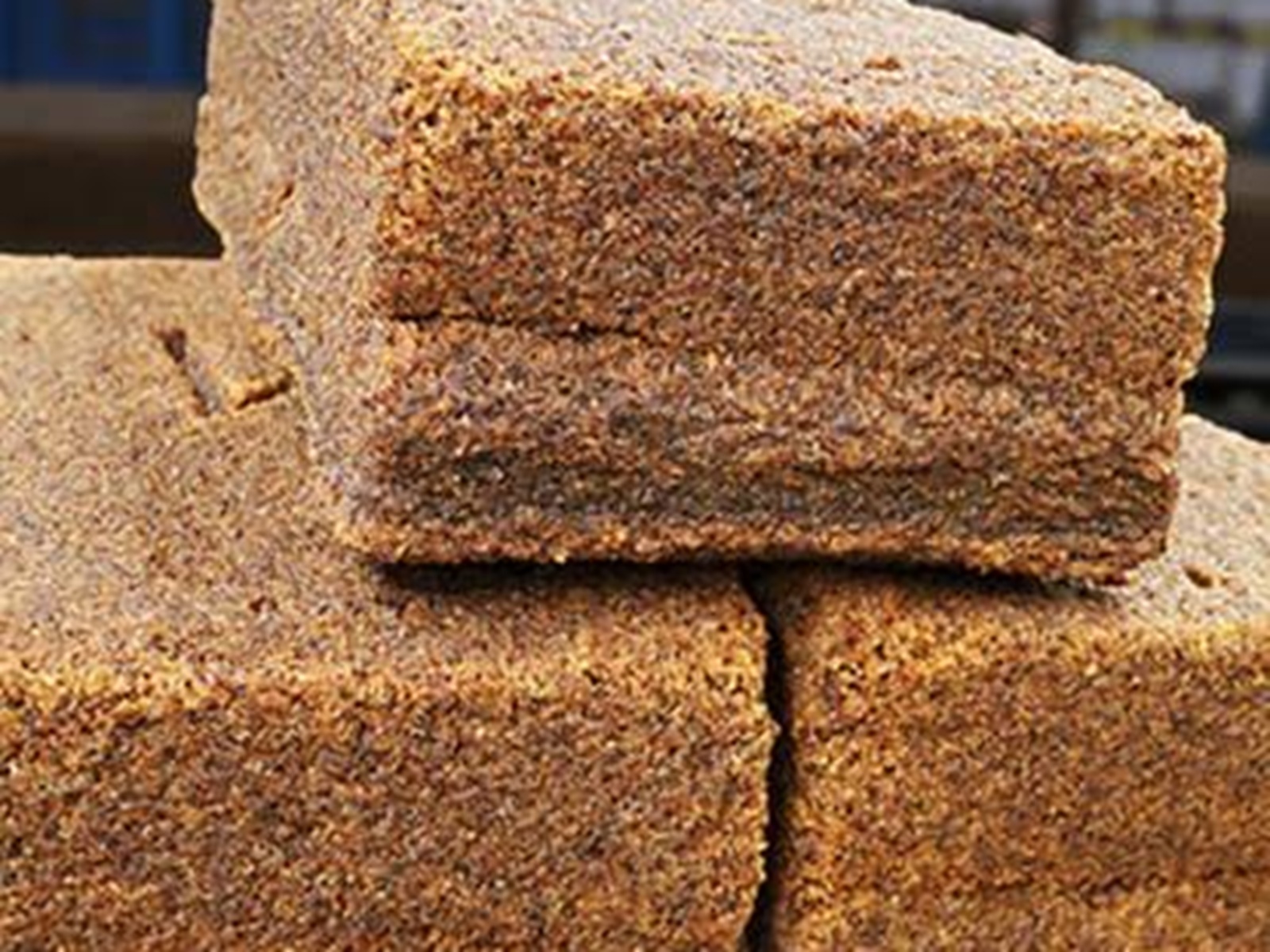
Material Development
Custom rubber formulations using natural rubber, synthetic elastomers and reinforcing fillers selected according to target product requirements.
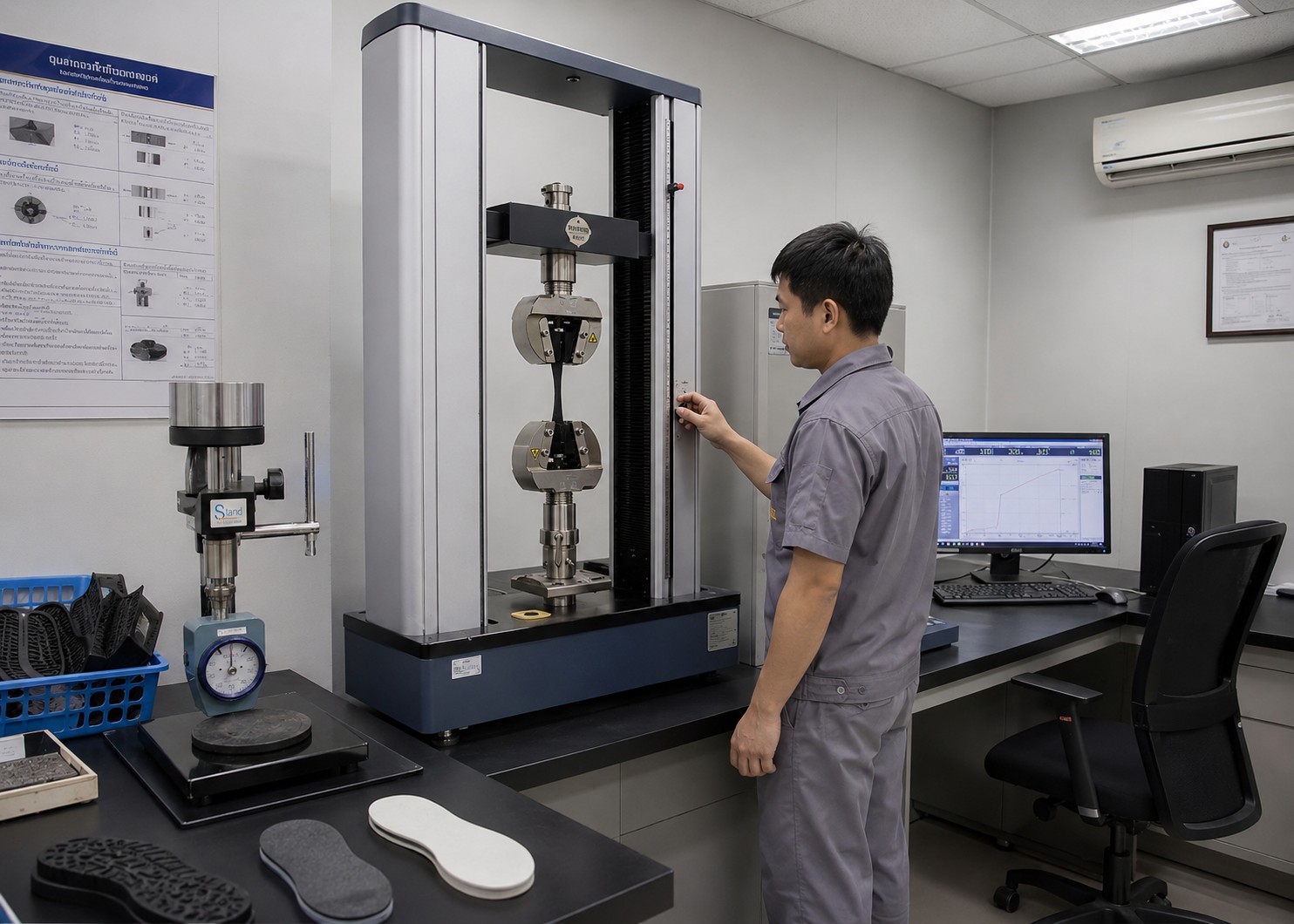
Testing Support
In-house factory quality control checking hardness, thickness, weight/density, tensile, elongation, and abrasion, with external testing coordination (such as RTEC) when formal physical-property evaluation is required.
Middle East Experience
Practical experience manufacturing rubber sole components for footwear supplied to the UAE, Iran and regional markets, with a deep understanding of hot-climate demands, indoor marble tile traction, and sandal weight distribution.
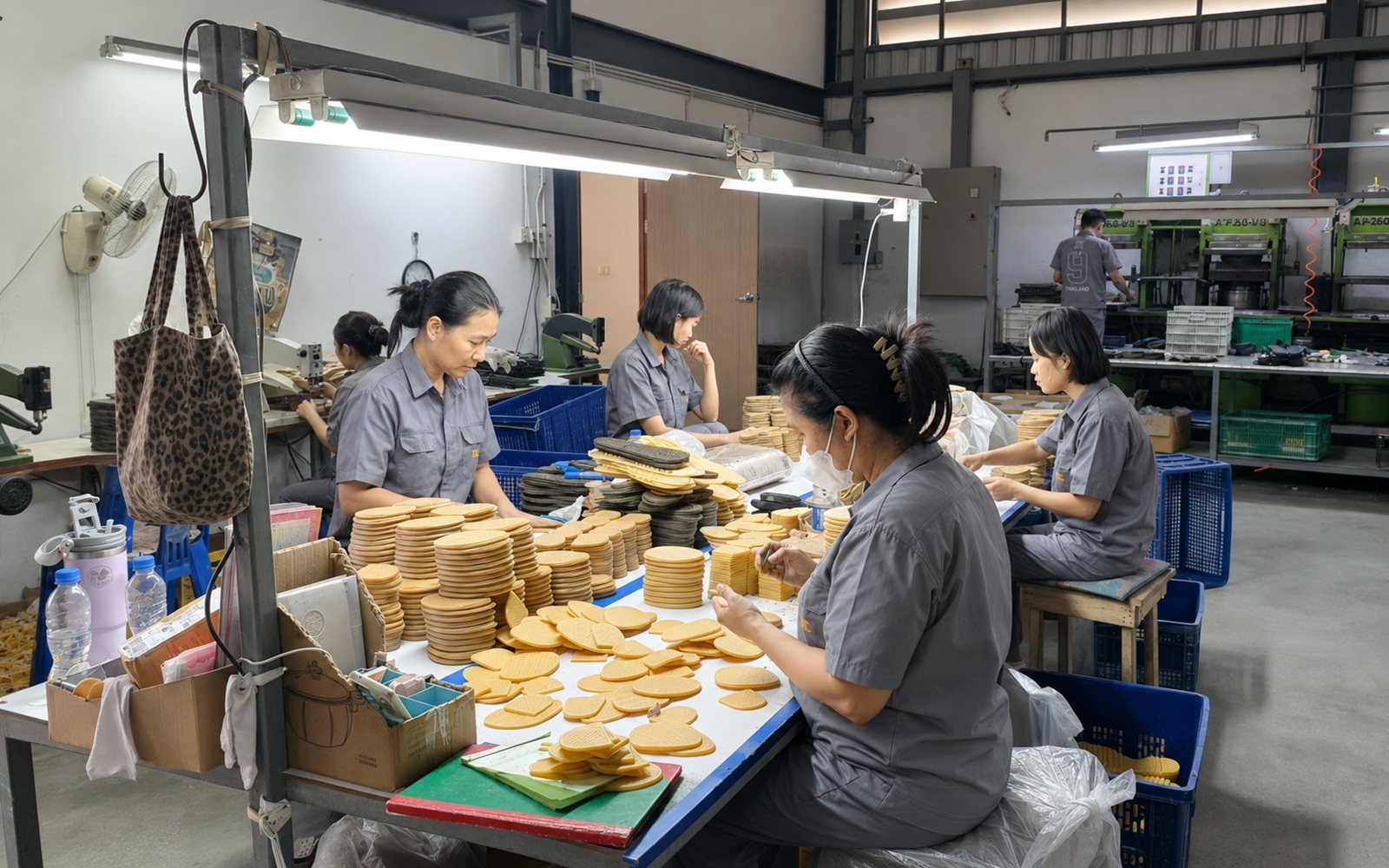
Transparent Recommendations
Direct technical dialogue with realistic tooling advice, clear MOQs, honest lead times, and no overpromising on material capabilities.
Factory & Quality Infrastructure
Rubber Compound Mixing
In-house rubber compounding using an internal kneader and two-roll mill
Vulcanization Compression Press
Hydraulic compression molding presses (6 heads, 12 working positions) for outsole vulcanization
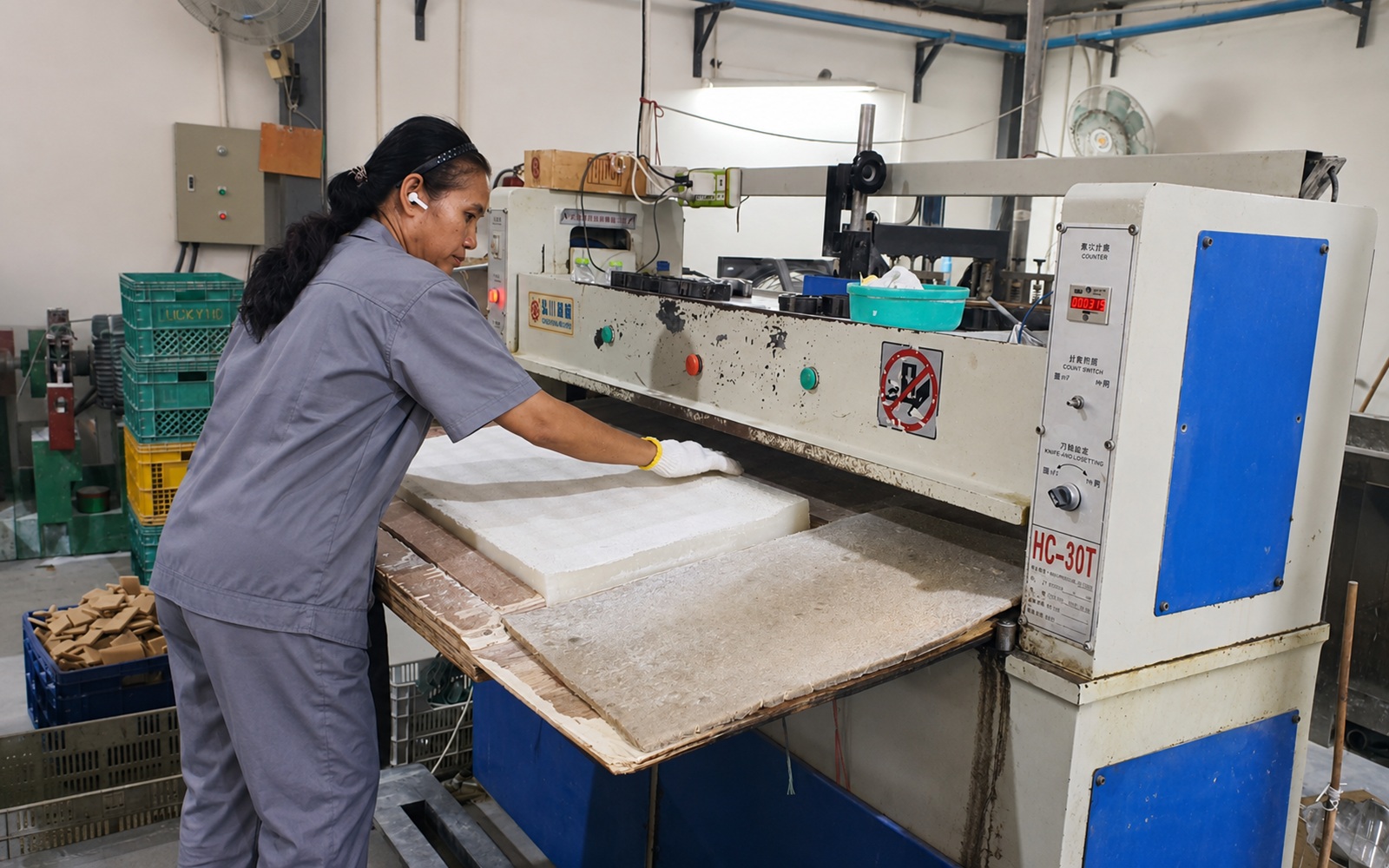
Precision Sole Trimming
Clicker press cutting & flash removal operations
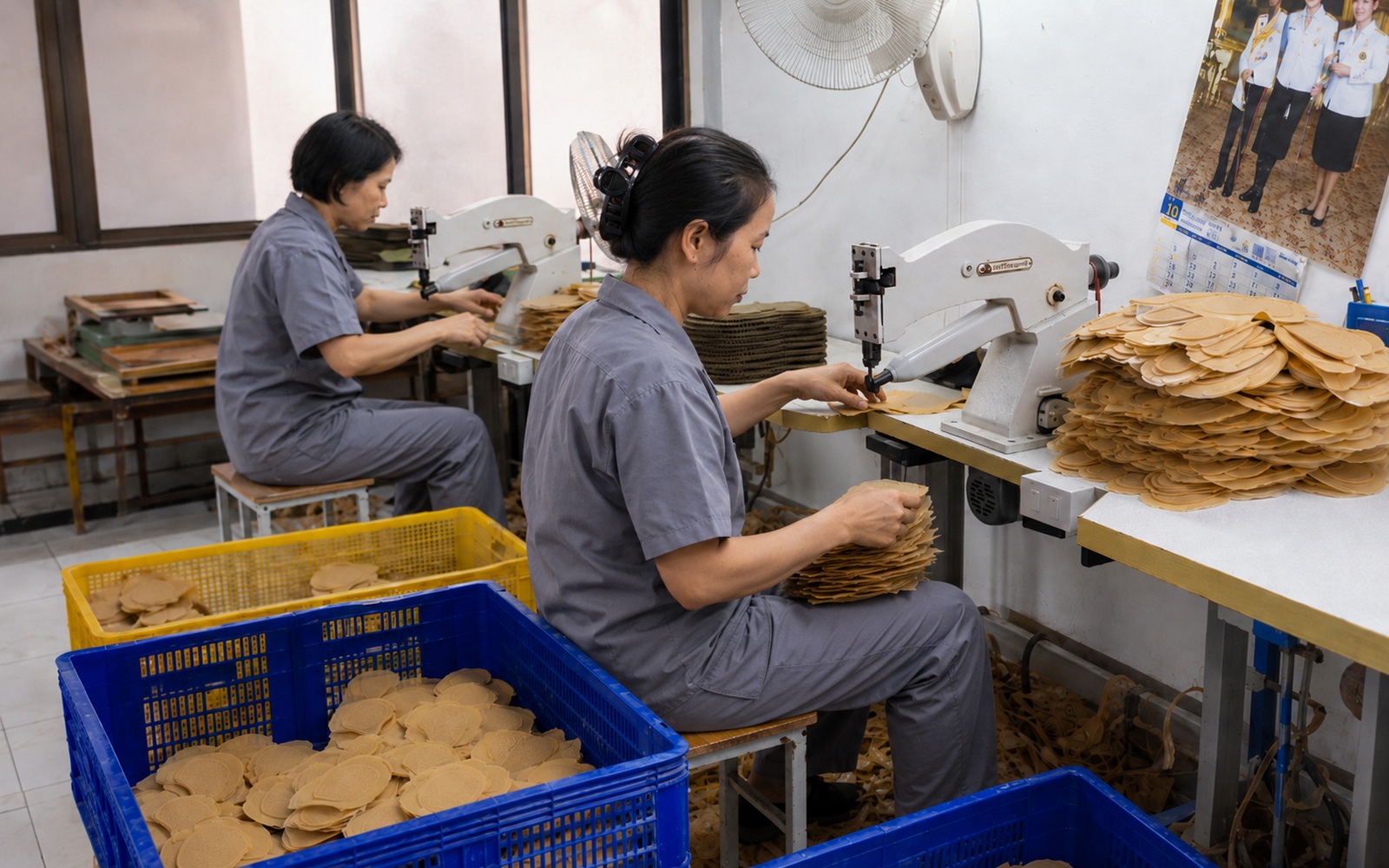
Final Quality Inspection
100% manual visual & dimensional verification
Factory Quality Control
In-house factory QC (Shore A, thickness, density, tensile, elongation, abrasion) & external lab coordination (such as RTEC)
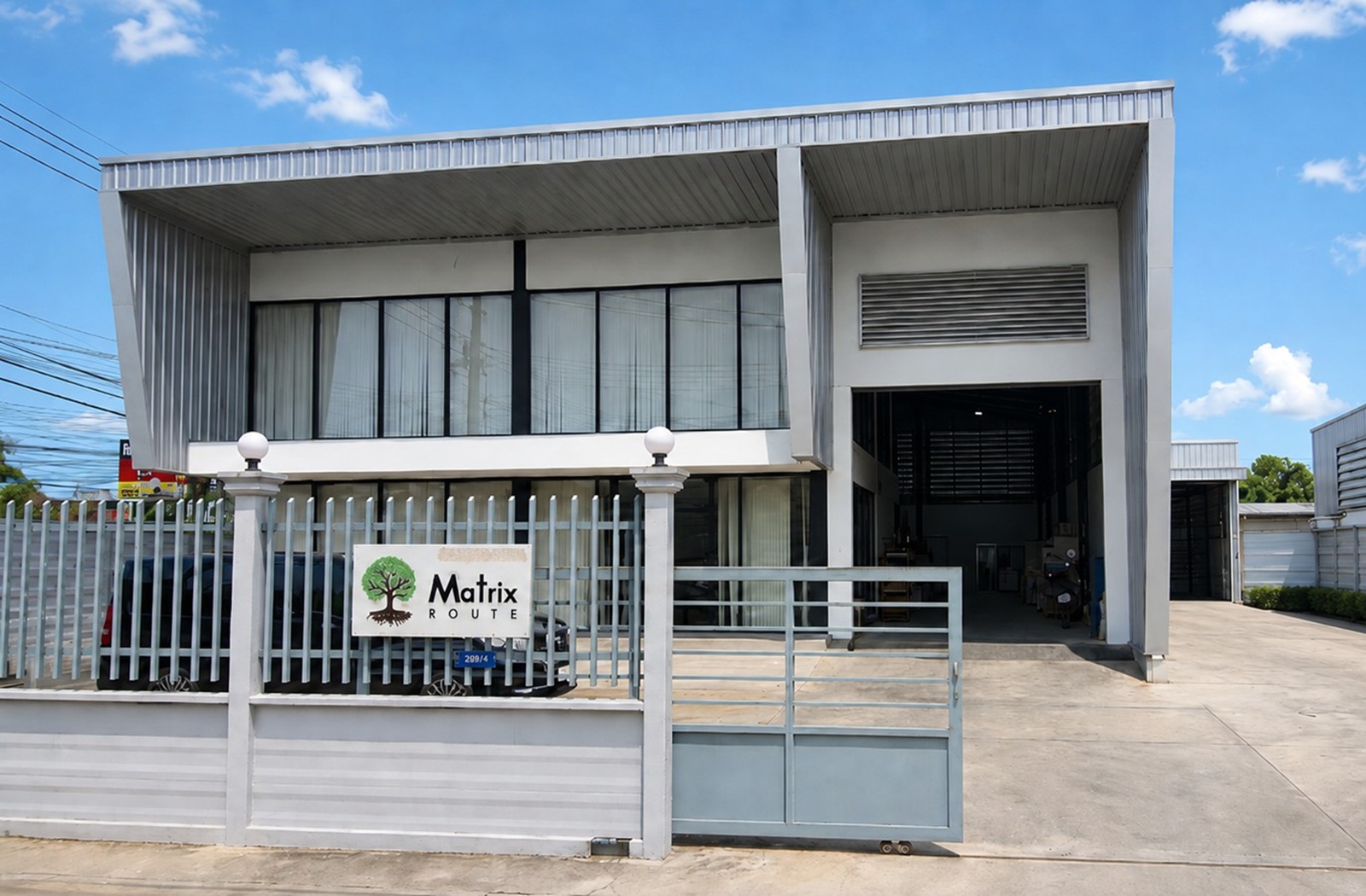
Factory Plant Exterior
Matrix Route manufacturing facility in Samut Prakan, Thailand
Example Natural Rubber Compound Test Results
The following results show one example of a natural rubber compound tested for Matrix Route. Actual properties vary according to formulation, product design and customer requirements.
Test Result Qualification: These values represent a specific tested compound and should not be interpreted as guaranteed values for every Matrix Route formulation. Project-specific physical properties are confirmed through sample development, trial molding, and lab validation.
Ready to Discuss Your OEM Rubber Sole Project?
Select your path below to initiate direct dialogue with our Samut Prakan, Thailand production team.
I Have an Existing Product
Seeking a higher quality Thailand rubber sole manufacturer, replacing a supplier, or optimizing compound physical properties.
I Am Developing a New Product
Starting a new footwear range, launching a brand line, or developing specialized sandal outsoles for regional markets.